

Interior Building Materials Upgrade Accelerates: How FEEPOP Fiber Cement Boards Are Becoming the Core of Next-Generation Interior Systems
A1 Fire Rating • Acoustic Comfort • Moisture & Mold Resistance • Elevated Indoor Performance
As interior building standards rise, FEEPOP fiber cement boards—A1 non-combustible, low VOC, high density and moisture resistant—are replacing traditional gypsum, timber and OSB across walls, ceilings and subfloors. Learn why architects, contractors and owners are adopting FEEPOP as a complete interior system.
As global expectations for indoor safety, durability, and long-term health rise, decision drivers in interior specification are shifting from lowest initial cost to “safety, longevity, and occupant wellbeing." From large public facilities and commercial complexes to high-end residential projects and renovation works, demand for higher-performance wall, ceiling and subfloor materials is accelerating.
In this transition, the FEEPOP fiber cement board series is emerging as a new standard for interior systems. With A1 non-combustible performance, low water absorption, high density, asbestos-free formulation and low VOC emissions, FEEPOP is increasingly specified by designers, contractors and owners for interior walls, ceilings and floor base systems.
Industry snapshot — interior materials driven by safety and health
Post-pandemic health awareness, tighter fire safety regulation and accelerating urban renovation projects have together created a dual demand for safety and healthy indoor environments:
Fire performance is moving toward “non-combustible” — many building types (hotels, hospitals, transit hubs, malls) and regions now require A1-rated materials for interior finishes and ceilings.
Acoustics and occupant comfort are now baseline expectations — higher-end residential, serviced apartments and modern office spaces increasingly demand superior sound insulation and better floor/footfall comfort.
Moisture and mold resistance are critical in hot/humid markets — tropical and coastal regions require materials that resist long-term deformation, mold growth and delamination.
Sustainability and low-toxicity materials matter — low VOCs, asbestos-free composition and recyclability improve the chances of green building certification (LEED, BREEAM) and developer acceptance.
Against this backdrop, fiber cement boards are transitioning from an exterior cladding material to a full-system interior solution, and FEEPOP leads this shift with product families tailored for walls, ceilings and subfloors.
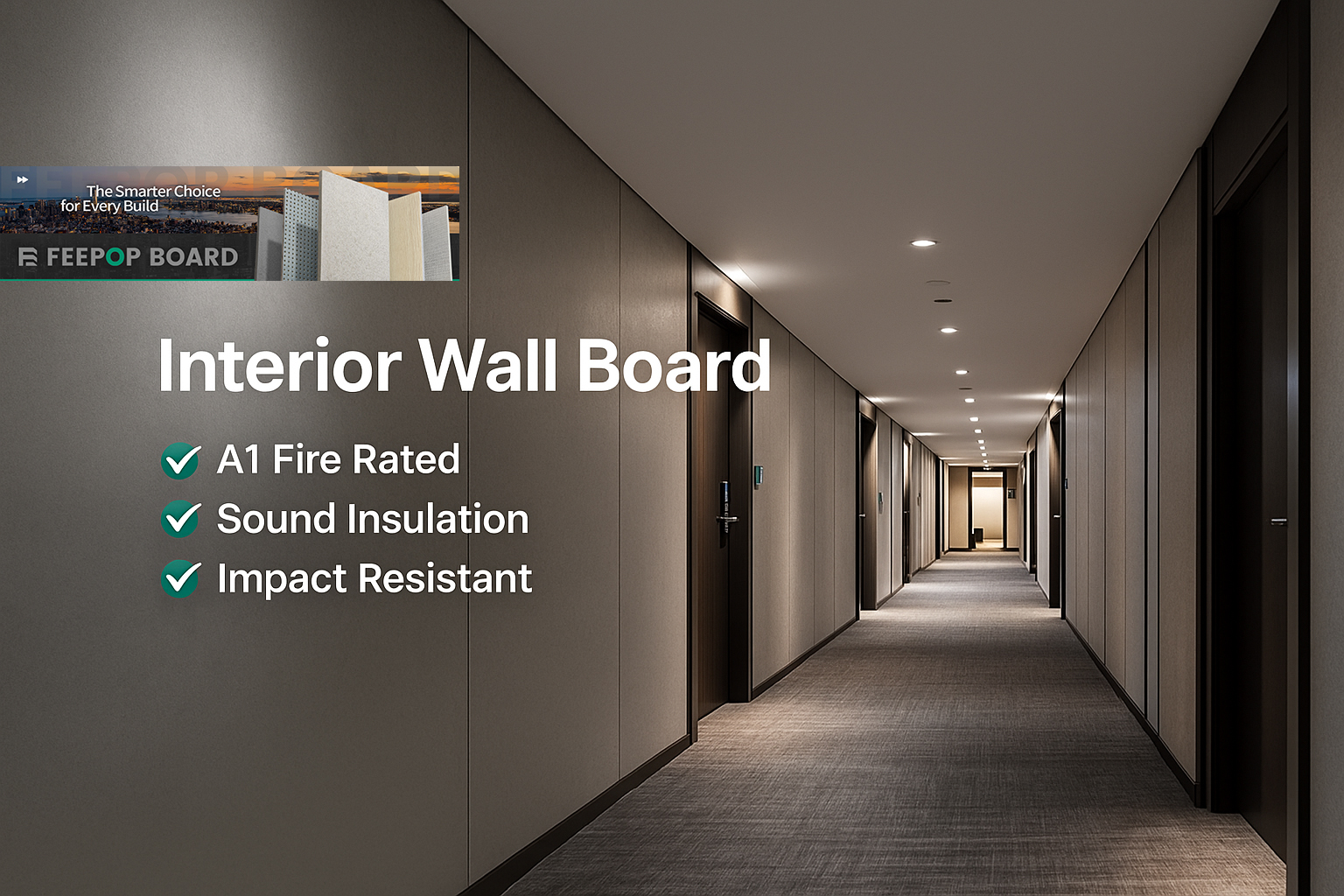
FEEPOP Interior Wall Board — structural stability, acoustic uplift, finish-friendly
Compared with traditional gypsum boards, FEEPOP interior wall boards deliver higher density (typically ≥1.2g/cm³), greater impact resistance and longer lifecycle while remaining easy to finish.
Key performance highlights
A1 non-combustible for robust fire safety compliance
Improved acoustic performance—beneficial in hotels, apartments, offices and schools
Superior impact and deformation resistance compared to lightweight alternatives
Asbestos-free, low VOC—healthier indoor air quality
Excellent compatibility with paint, skim coat, decorative panels, wood veneer, thin stone, PVC or laminate finishes
Typical applications: hotel room partitions, apartment demising walls, elevator lobbies and corridors, office partitions, and public circulation areas. Under modern “lightweight structure + high performance" design trends, FEEPOP interior wall boards are becoming the contractor's reliable standard.
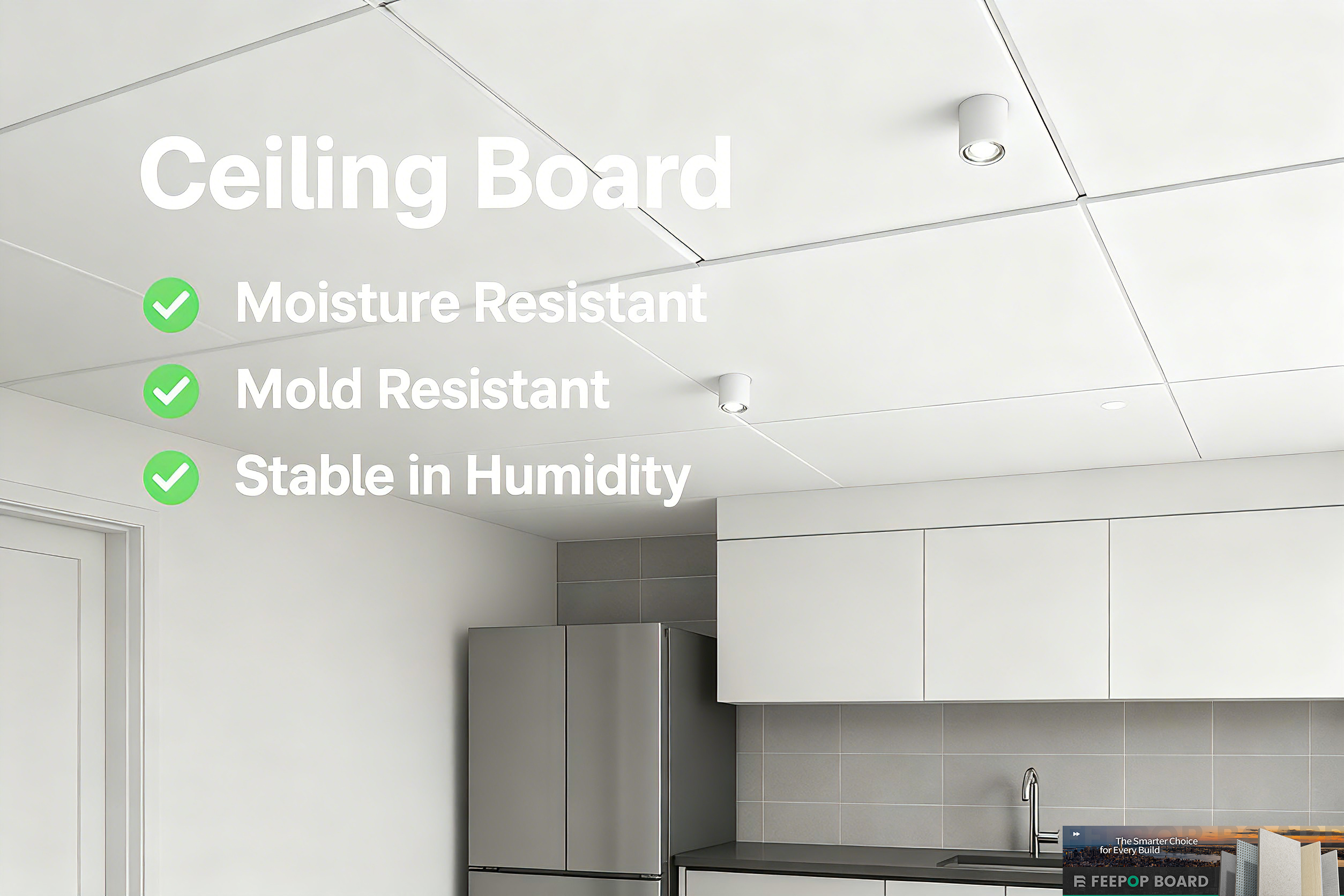
FEEPOP Ceiling Board — moisture-resistant, long-term flatness, ideal for humid environments
Ceilings are vulnerable to moisture: timber warps and gypsum sags when exposed to humidity. In kitchens, bathrooms, basements and coastal climates, FEEPOP ceiling boards provide a stable, non-sagging solution.
Advantages
High moisture and mold resistance; long-term dimensional stability
A1 non-combustible construction for strict public and commercial fire codes
Smooth, uniform surface suitable for direct painting or applied finishes
Reduced lifecycle maintenance and repair costs
Typical applications: restaurant kitchens, wet-zone ceilings, hotel corridors, mall atriums and basement ceilings—especially in tropical markets such as Singapore and Indonesia where humidity is a constant design challenge.
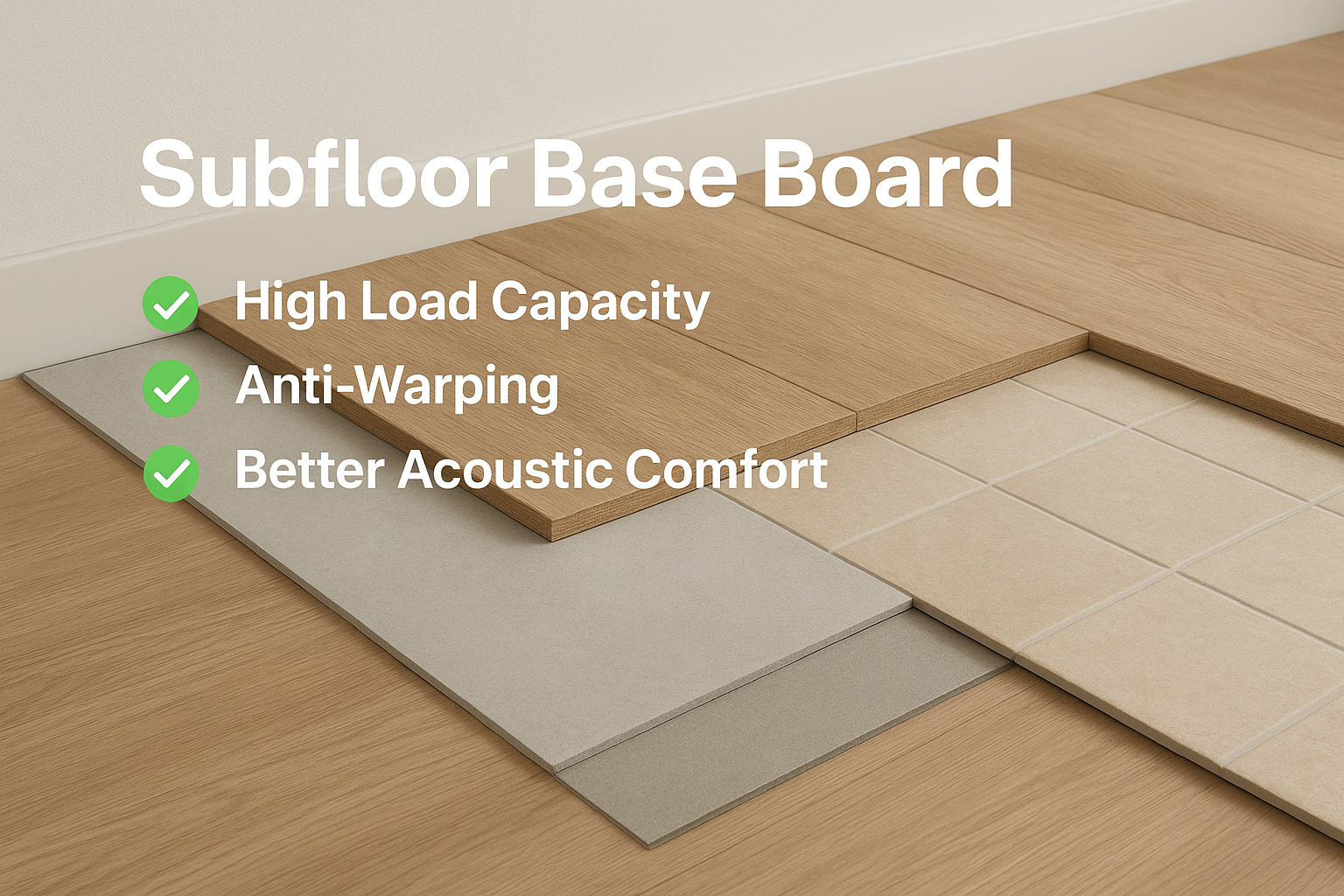
FEEPOP Subfloor Base Board — stable base, high load capacity, reduced footfall noise
Floor systems are the next battleground for interior upgrades. Developers and designers now evaluate subfloor solutions on overall lifespan, load performance, compatibility with SPC/LVT/tiles and acoustic behavior.
Core benefits
High bearing capacity suitable for tile, stone, SPC/LVT and engineered wood overlays
Moisture-stable and dimensionally resilient—prevents floor buckling and hollowing
Improved impact and airborne/structure-borne acoustic performance (reduced footfall noise)
Resistant to decay and pests, delivering long service life
Typical applications: renovation projects, retail stores, schools, corridors and high-traffic transit retail zones—where fast, reliable installation and minimal rework are prioritized.
Why the construction side prefers FEEPOP — system advantages, not just one metric
For engineers, architects and main contractors, FEEPOP's attraction lies in system performance rather than individual properties:
Easier regulatory approval — A1 non-combustible rating meets strict fire review criteria.
Lower life-cycle cost — non-absorbent, non-molding boards reduce repairs and callbacks.
Stable substrate for superior finishes — high flatness and dimensional stability improve final surface quality and reduce installation time.
Health and sustainability credentials — asbestos-free, low VOC composition aligns with green building objectives.
Customizable and scalable supply — OEM, branding options, custom sizes and project manufacturing suit large developers and repeat projects.
Market trend — fiber cement expands from façades to full interior systems
Historically used mainly for external cladding, fiber cement boards are now moving indoors along three clear trajectories:
High-stability fiber cement replacing gypsum for internal partitions
Ceilings demanding enhanced moisture and fire resistance shifting away from timber/gypsum
Subfloor bases moving from timber-based or cement-based systems to fiber cement for durability and acoustic gains
Industry forecasts indicate an 8–12% CAGR for indoor fiber cement applications over the next five years, with especially strong growth in Southeast Asia, the Middle East, the UK and Australia. FEEPOP's consistent product performance, mature supply chain and competitive pricing position it to capture a meaningful share of this structural upgrade demand.
FEEPOP positioning & value proposition
FEEPOP positions itself as a specialist fiber cement board manufacturer delivering a full system for modern interiors:
Certified A1 fire performance across product families
Integrated solution from interior wall to ceiling and subfloor boards
Project customization, OEM capability and scalable production for long-term partnerships
Reliable logistics and global market experience
FEEPOP's mission is to make interior spaces safer, more durable and more comfortable—helping specifiers and contractors deliver long-lasting, low-maintenance results.
Contact & technical support
For technical data sheets, sample requests, system specification guidance or distribution partnerships, please contact FEEPOP's technical team at our website or email. We provide project-level recommendations, customization options and supply planning to support architects, contractors and distributors worldwide.
